
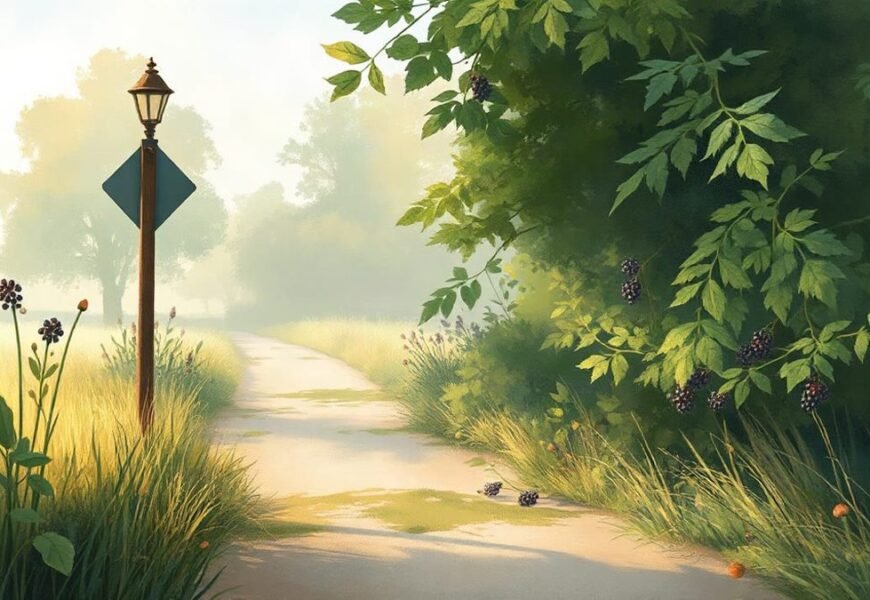
Can you pick blackberries beside a public footpath?
Yes, in most cases you can pick blackberries growing beside a public footpath, as long as you are picking them for personal use and not for sale. Under the Theft Act 1968, it is generally legal to pick wild fruit, foliage, fungi or flowers growing wild, provided the amount is modest and the berries are for your own consumption (Devon Live).
That said, the location matters. Warnings have circulated about a £300 fine for picking blackberries in the wrong place, and while the figure should not be read as a blanket penalty simply for picking a berry, there are genuine rules about land access and what you may remove (Salisbury Post). This guide explains where you stand, what to avoid and how to pick blackberries safely and considerately.
Key takeaways
- Picking wild blackberries for personal consumption is generally lawful in England and Wales under the Theft Act 1968 (Devon Live).
- You must not dig up or remove the plant itself, and you should not take berries from private gardens, farmland or land where you do not have permission to be.
- The widely reported £300 fine relates to picking in the wrong location or circumstances, not to blackberry picking in general (Salisbury Post).
- Avoid berries low to the ground where dogs may have fouled, and those growing right beside busy roads where pollution is a concern (Manchester Evening News).
- Blackberry season typically runs from July to October, with the best picking from late August into September (Country Living; Manchester Evening News).
What the law actually says about picking wild fruit
The legal starting point for foragers in England and Wales is the Theft Act 1968. Under this legislation, it is generally legal to pick fruit, foliage, fungi or flowers that are growing wild, as long as you are doing so for personal consumption rather than commercial sale (Devon Live). In other words, filling a small tub for a family crumble is very different from harvesting sacks of berries to sell at a market.
The law also draws a line between the produce and the plant. Picking the berries is one thing; digging up, cutting or removing the bramble itself is another. The law does not extend to digging up or destroying the plant itself, so always pick by hand and leave the bramble intact.
The difference between public land and common rights
It is worth understanding the distinction between being able to walk somewhere and being able to take things from there. It is also worth remembering that much of the land alongside footpaths is privately owned, so respect private property and any signs indicating restrictions. This is exactly why the footpath question matters: the path is public, but the hedge beside it usually is not.
Happily, the general rule on wild fruit still applies. Berries growing wild on a hedge beside a right of way can be picked for personal use, just as they can on other land you are lawfully on. What you should not do is wander off the path into private fields, orchards or gardens without permission.
Where the £300 fine stories come from
Recent headlines have warned that blackberry pickers could face a £300 fine, which understandably made some people nervous about a much-loved autumn tradition (Manchester Evening News). The reality is more nuanced. As the Salisbury Post explains, the widely reported figure should not be interpreted as a blanket fine simply for picking a blackberry. It relates to situations where people pick in the wrong place or circumstances, such as taking fruit from private property without permission.
Some coverage also suggested that picking blackberries might leave birds short of food or damage the environment. Foraging voices have pushed back on this, pointing out that blackberrying is an old English tradition and that responsible pickers take only a small share of an abundant crop (Country Living). The sensible conclusion is that you should plan your foraging with guidelines in mind, but there is no need to be discouraged by scaremongering.
Where you should not pick
- Private gardens and farmland: do not assume you have permission to enter private land or remove produce from someone’s property (Salisbury Post).
- Protected sites: rules can vary depending on the location, and some sites have specific restrictions on what may be removed.
- Busy roadside verges: berries growing directly alongside busy roads may be exposed to pollution (Manchester Evening News).
- Ground-level growth: experts advise avoiding berries within reach of dogs, for hygiene reasons (Manchester Evening News).
Is it safe to eat blackberries from a footpath hedge?
Legality aside, safety and hygiene deserve a moment of thought. Brambles beside footpaths are popular with walkers and dog walkers alike, so berries hanging low near the path are best left alone. Experts recommend giving berries close to the ground a wide berth, since dogs can reach them (Manchester Evening News).
Pick from eye level upwards where you can, choose plump, fully black fruit, and give your harvest a rinse at home before eating. Brambles can also carry small stings and scratches, so long sleeves are a sensible choice for beginners.
Simple hygiene habits for roadside and path-side picking
- Choose berries at chest height or above, away from the ground and from the edge of busy roads.
- Pick only fruit that is fully black and comes away with a gentle tug; red or firm berries will not ripen once removed from the vine (Manchester Evening News).
- Wash berries before eating and use them promptly, as wild fruit does not keep long.
- Take only what you will use, leaving plenty for wildlife and other pickers.
When is blackberry season in the UK?
Blackberry season typically runs from July to October in the UK, giving foragers a generous window through late summer and early autumn (Country Living). The sweet spot for picking is from late August through to September, when berries are fully black, plump and juicy, and come away from the stem with the gentlest of tugs (Manchester Evening News).
Unripe fruit is not worth the effort. Avoid red or firm berries, as they will not ripen once picked. If a berry needs a proper pull to come free, leave it for a few days and come back.
How to forage responsibly beside public paths
The Woodland Trust describes blackberrying as one of the UK’s most popular traditional foraging activities and encourages people to forage responsibly, taking only from plentiful sources and making sure they can identify what they are collecting (Salisbury Post). Blackberries are among the easiest plants to identify, which makes them an ideal first forage for beginners, but the same habits will serve you well later.
Good practice beside a footpath looks like this:
- Stay on the path; pick only from brambles that overhang the right of way, and never push through hedges into private fields.
- Take a modest amount from each patch, spreading your picking across several spots rather than stripping one bush.
- Leave berries for wildlife as well as other foragers; birds and small mammals rely on autumn fruit too.
- Take your litter home and be courteous to walkers, dog owners and the landowner whose hedge you are picking from.
What happens if you pick in the wrong place?
The realistic consequence of picking in the wrong place is being asked to leave, or in more serious cases an allegation of theft or trespass. Removing produce from private land without permission, taking more than a reasonable amount for personal use, or picking for commercial gain are the situations where warnings such as the £300 fine figure circulate (Salisbury Post). Rules can also vary depending on the location and circumstances, so it pays to check signs and local notices.
For the everyday forager walking a public footpath with a small tub of berries for home use, the risk is minimal. Pick wild fruit modestly, stay on the path and respect private property, and you are exercising a right that has been part of British countryside life for generations.
FAQ
Can I pick blackberries from a hedge on farmland beside a footpath?
The Theft Act 1968 generally permits picking wild fruit, foliage, fungi or flowers growing wild for personal consumption (Devon Live), but permission to enter private farmland is a separate matter. If in doubt, check with the landowner and never climb through the hedge or enter the field itself.
Can I sell blackberries I have picked?
No. The general permission to pick wild fruit applies to personal consumption only, not commercial sale (Devon Live). Selling foraged berries is a different matter entirely and requires the landowner’s permission.
Is the £300 fine for picking blackberries real?
Not in the way headlines suggest. The widely reported £300 figure should not be interpreted as a blanket fine simply for picking a blackberry; it relates to picking in the wrong place or circumstances, such as on private property without permission (Salisbury Post).
Can I dig up a bramble and take it home?
No. The law permits picking the fruit, foliage, fungi or flowers growing wild, not removing or destroying the plant itself (Devon Live). Digging up a bramble could amount to theft or criminal damage.
What is the best time of day to pick blackberries?
There is no legal restriction on timing, and dry weather is pleasantest for picking. Focus instead on ripeness: pick from late August to September when berries are fully black and come away with a light tug, and avoid red or hard berries (Manchester Evening News).
Final thoughts
So, can you pick blackberries beside a public footpath? In most cases, yes. Pick modestly, for personal use, from plants growing wild, and stay on the path. Skip low-hanging berries, avoid busy roadsides, and leave plenty for wildlife and fellow pickers. Done well, blackberrying is one of the safest and most rewarding ways to start foraging in Britain. If you fancy expanding your harvest beyond berries, our guides to identifying other easy autumn hedgerow fruits are a natural next step.
Sources
- Picking blackberries could land you a £300 fine, but here's what the rules really say
- Picking blackberries £300 fine warning and legal rules for anyone gathering wild fruit | D