

Affiliate disclosure: This article contains affiliate links. We may earn a commission if you purchase through them, at no extra cost to you.
Key takeaways
- Rainwater is your best allotment water supply. Every 1mm of rain on 1 square metre of roof yields roughly 1 litre of water, so even a small shed roof can fill a 200-litre butt in one decent downpour, according to Garden UK.
- Two linked 200-litre butts are a sensible starting point for a half plot, especially when raised on blocks to power a soaker or drip hose by gravity alone.
- Hosepipe bans cover mains standpipes, not stored rainwater, which is exactly why a butt network keeps you watering through a dry summer.
- Any connection to mains pipework must comply with the Water Supply (Water Fittings) Regulations 1999, which exist to prevent waste and contamination of the public supply, as the National Allotment Society explains.
- Off-grid “water from air” devices need power and humid air, and DIY guides such as Joseph’s Well describe supplemental backup systems, not replacements for rainwater storage.
The most reliable allotment water supply for most UK plot holders is a combination of stored rainwater and a simple delivery system: linked water butts fed from shed or polytunnel roofs, with a gravity-fed drip line to carry water to the roots. This costs little, needs no mains connection and keeps working through hosepipe bans, which is precisely when a shared standpipe lets you down. For anything beyond that, from pumps to atmospheric water generators, it pays to understand the trade-offs before you spend.
Why water is the limiting factor on most allotments
Water availability is the single most limiting factor on most UK plots during the growing season. The Garden Patch describes the reality for the majority of plot holders: a shared standpipe at the end of the row, often restricted to watering can use, with queues on busy council sites in summer and supply sometimes cut entirely during hosepipe bans or drought orders.
The difference between a productive plot through July and August and one that struggles comes down almost entirely to how well the water system was thought through before the dry weather arrived. The good news is that setting up an independent system does not require significant expense or specialist knowledge.
How to size a water butt setup for a UK allotment
The basic maths is straightforward. Garden UK notes that every 1mm of rain on 1 square metre of roof gives you about 1 litre of water. A 10 square metre shed roof therefore collects around 250 litres from a 25mm downpour, enough to fill a 200-litre butt with some to spare.
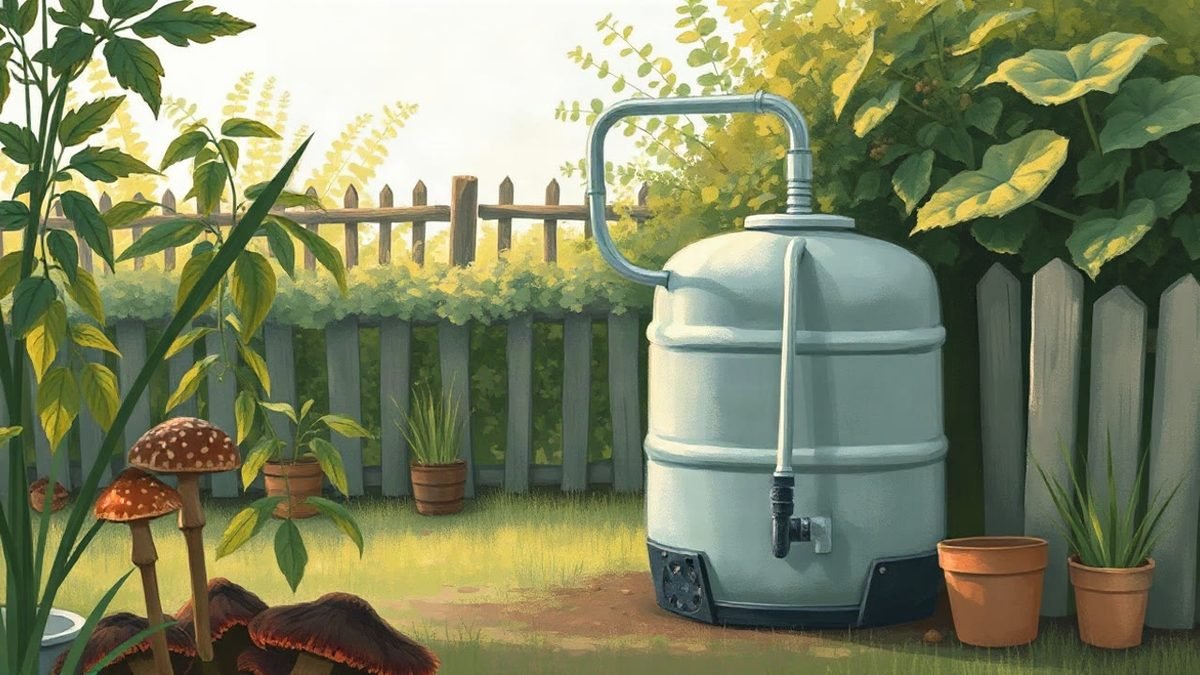
You do not need to store an entire season’s worth of water, because butts fill and empty many times over a season. As a rough guide, Garden UK suggests two linked 200-litre butts as a good start for a half plot.
Positioning and plumbing
- Site butts next to every roof on the plot: shed, greenhouse, polytunnel or even a simple timber catchment structure.
- Stand butts on breeze blocks or a sturdy base. Raising the butt gives enough head of water to run a soaker or drip hose.
- Link butts together at the base with butt connectors so they fill and drain as one store.
- Fit an overflow outlet so surplus redirects to another butt or a soakaway rather than flooding your paths.
- Use a lid and keep gutters clear to reduce debris, algae and mosquito access.
For a fuller walkthrough of pipes, stands and fittings on a UK site, see the guide to setting up an allotment water system from The Garden Patch.
What is the best way to water without a mains tap?
The best-watered plots use more than one source. Relying on the standpipe alone leaves you stuck in a dry spell or a hosepipe ban. A layered approach looks like this:
- Rainwater storage as your primary supply, topped up free every time it rains.
- Gravity-fed delivery, such as a soaker or drip hose from a raised butt, which waters the roots with little effort and no electricity.
- The standpipe as a top-up for transplanting and established drought-stressed crops when your storage runs out.
Delivery method matters as much as storage. Garden UK recommends watering in the morning, aiming at the base of the plant rather than the leaves, and applying a thick mulch of compost or manure so you water far less often. Drip lines and seep hoses deliver water slowly where it is needed, cutting evaporation and waste compared with overhead sprinkling.
What are the rules about water on allotment sites?
Allotment sites, like any premises with a public water supply, have a duty to comply with the Water Supply (Water Fittings) Regulations 1999. According to the National Allotment Society, the objectives of these regulations are to prevent waste, misuse, undue consumption and, most importantly, contamination of the public drinking water supply.
In practice this matters most if you connect anything to a mains-fed standpipe or pipework: backflow prevention is the key concern, so water from butts or hoses must never be able to siphon back into the mains. Rainwater harvesting from your own roofs, which never touches the mains, sits outside this problem entirely. If you plan any permanent mains connection, check with your site committee or water supplier first.
It is also worth remembering that during a formal hosepipe ban, restrictions apply to mains standpipes. Garden UK points out that rainwater you have stored yourself is not covered, which is a strong argument for building your butt network before the summer, not during a drought.
Do you need a pump for an off-grid allotment?
For most plots, no. A single water butt raised roughly a metre gives modest but usable pressure for a drip or seep hose running on the flat. Gravity is free, silent and needs no maintenance, which makes it the default choice for allotment watering without mains.
A pump becomes useful in specific situations:
- Long runs of hose or lines that need to climb uphill, where gravity pressure is insufficient.
- Feeding a sprinkler or larger irrigation set-up rather than a drip line.
- Moving water between distant butts or from a large storage tank to the growing beds.
If you go down the pump route, remember it needs power. On an unpowered allotment that means a battery, a small solar panel with a suitable pump, or a generator, each of which adds cost, weight and security concerns. Many plot holders decide the simplicity of raised butts and drip lines beats the extra kit.
Can you harvest water from the air on an allotment?
Atmospheric water generators (AWGs) condense moisture from the air into liquid water. Commercial units exist, but they are powered appliances, and their output depends heavily on humidity and electricity supply. On a typical British allotment, rainwater harvesting will almost always be cheaper and more productive.
That said, there is growing interest in DIY approaches. If this idea appeals to you, we have compared atmospheric water generators against survival guides for home water options, and our guide to building a home backup water plan covers mains, rainwater and other sources together.
Joseph’s Well: who it suits and who it does not
One of the more talked-about products in this space is Joseph’s Well, a digital DIY guide rather than a shipped appliance. According to the seller, it provides a video walkthrough, printable blueprints, a parts list and supporting manuals so you can build a condensation-based atmospheric water generator yourself from hardware-store parts. It is sold as a one-time $39 purchase (regular price $67, according to the seller) with a 60-day money-back guarantee, though you should verify current terms on the sales page.
The honest caveats matter here. Independent review material describes the realistic output as supplemental: useful in favourable humidity, far less in dry air, and dependent on a power source to run the condensation process. Condensed water must be filtered before drinking, and the DIY unit is not a certified potable-water device. For an allotment, that means it is at best an interesting off-grid backup for drinking or emergency water, not a substitute for hundreds of litres of stored rainwater for your crops. If you want a hands-on project and live in a humid climate, the Joseph’s Well DIY guide may be worth a look; if your goal is simply to keep the beans alive in August, spend the money on extra butts and a drip kit instead.
How do you make stored water go further?
Whatever supply you build, crop-side habits decide whether it lasts the season:
- Mulch thickly with compost, manure or straw. A good mulch means you water far less often, according to Garden UK.
- Water in the morning, aimed at the base of the plant, not the leaves, to cut evaporation and disease risk.
- Group thirsty crops such as beans, courgettes and tomatoes close to your butts so hauling is minimal.
- Prioritise seedlings, newly planted stock and fruiting crops over established, deep-rooted plants in a shortage.
- Keep spare capacity: butts cycle many times a season, so an extra link butt used as overflow stores water you would otherwise lose.
Affiliate recommendation
Mentioned in this article: Joseph’s Well
Joseph’s Well is a DIY guide that, according to the seller, explains how to build a device that collects water from the air. It is instructions, not a ready-made machine.
Read the seller’s information →
Affiliate link: we may earn a commission if you purchase, at no extra cost to you. We have not tested this product.
FAQ
How many water butts do I need for an allotment?
There is no fixed answer, but Garden UK suggests two linked 200-litre butts as a good start for a half plot. Because butts refill with every shower, you want enough capacity to bridge dry spells rather than store a whole season. More linked capacity is almost always the cheapest upgrade.
Can I use a hose on my allotment during a hosepipe ban?
Restrictions during a ban apply to mains water, including shared standpipes, and many sites restrict hoses even in normal times. Rainwater you have stored yourself is not covered by a hosepipe ban, according to Garden UK, so a gravity-fed drip line from a butt keeps working when mains use is restricted.
Is water from a water butt safe to drink?
No. Rainwater collected from roofs picks up debris, bird droppings and contaminants, and water butts are not drinking-water storage. Treat butt water as suitable for irrigation only. Any water intended for drinking must be properly filtered and treated, and even then a DIY system is not a certified potable-water device.
Do atmospheric water generators work in the UK?
They work best in warm, humid conditions and need a power supply. Output falls significantly in dry or cold air, so in the UK such DIY designs are best thought of as a supplemental or backup source rather than a primary one, a limitation also noted in third-party reviews of the Joseph’s Well guide.
Do I need permission to connect a hose to the site standpipe?
Check with your site committee first. Any connection to mains-fed pipework falls under the Water Supply (Water Fittings) Regulations 1999, which require measures to prevent backflow and contamination of the public supply, as the National Allotment Society explains. Rules differ between sites, so your committee or landlord can confirm what is and is not permitted on your plot.
Final thoughts
A dependable allotment water supply does not need mains, pumps or expensive kit to start. Catch rain from every roof on the plot, link a couple of 200-litre butts, raise one on blocks and run a soaker hose to the beds, then mulch well and water in the mornings. Build that first, and add pumps or off-grid extras only where a genuine need remains. For a broader view of storing and sourcing water beyond the plot, our guide to building a home backup water plan is a natural next step.
Sources
- Allotment Water Supply Solutions UK | Garden UK
- Joseph’s Well Review (2026): Honest Look at the DIY Water Guide